
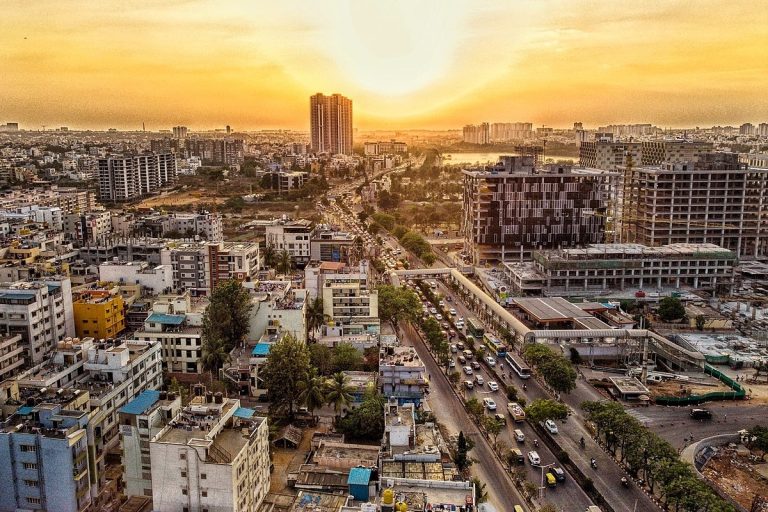
Bangalore’s Urban Surge: A Foundation for Real Estate Evolution
Bangalore, once celebrated for its serene lakes and tree-lined avenues, has transformed into a bustling epicenter of technology and innovation—driving unprecedented population growth and urban expansion. This rapid influx of professionals and businesses has placed immense pressure on the city’s existing infrastructure, from road networks and public transit to water supply and waste management. Areas like Hosa Road, Electronic City, and Sarjapur Road now exemplify the tension between development and sustainability, where urban planning struggles to keep pace with demand.
For homebuyers and investors alike, understanding this dynamic is crucial. The strain on infrastructure directly influences property values, commute times, and quality of life. Traffic congestion and inadequate last-mile connectivity can diminish the appeal of otherwise promising residential zones. Conversely, neighborhoods witnessing proactive civic upgrades often see accelerated appreciation.
This section sets the stage for a deeper exploration of how infrastructure challenges shape real estate decisions across Bangalore. You’ll learn how to assess location viability through the lens of current connectivity and future development plans, identify red flags in rapidly urbanizing zones, and align property choices with long-term livability and investment resilience—all essential insights for making informed, strategic decisions in today’s competitive market.
When Growth Outpaces Planning: How Unplanned Infrastructure Shapes Bangalore’s Real Estate
Bangalore’s rapid expansion has often proceeded without coordinated urban planning, leading to infrastructure developments that emerge reactively rather than strategically. These unplanned interventions—such as sudden road widening, ad-hoc flyover constructions, or delayed metro corridor rollouts—have created ripple effects across the city’s property market. Areas once considered peripheral have seen sharp spikes in demand overnight, while neighborhoods burdened by construction congestion have experienced temporary devaluation.
For instance, spontaneous transit projects around ORR and Hennur have redefined micro-markets, pushing developers to pivot quickly toward high-density housing. Meanwhile, inconsistent last-mile connectivity near new metro stations has left some properties underutilized despite their proximity to mass transit. This unpredictability demands that buyers and investors adopt a more strategic lens.
To navigate this landscape effectively:
- Assess not just current infrastructure, but proposed government plans and their historical execution rates
- Evaluate how ongoing construction might impact access, noise levels, and daily life for 2–3 years ahead
- Prioritize locations with balanced growth—where residential demand aligns with utility and transit upgrades
Understanding the pattern behind Bangalore’s organic development helps stakeholders anticipate value shifts and avoid costly timing errors in a dynamic, location-sensitive market.
How Urban Challenges Shape Smart Real Estate Choices in Bangalore
Bangalore’s rapid expansion has brought undeniable pressure on critical infrastructure, directly influencing where savvy homebuyers and investors are placing their trust. Traffic congestion, erratic water supply, and inconsistent power availability are no longer just daily inconveniences—they’re key decision drivers in property evaluation. As the city stretches beyond its core, areas lacking robust civic planning often face prolonged commutes, frequent water tankers, and reliance on generators, undermining long-term livability and asset value.
Today’s informed buyers prioritize micro-markets with proven utility resilience. Proximity to metro corridors, access to sustainable water management systems like rainwater harvesting, and housing projects with dedicated power backups are gaining premium status. Neighborhoods that integrate smart city principles—efficient waste management, digital connectivity, and green spaces—are emerging as preferred investment zones.
To future-proof your decision, consider:
- Connectivity: Is the location well-connected via public transit to reduce dependency on private vehicles?
- Water security: Does the development have independent water sourcing or recycling mechanisms?
- Power redundancy: Are uninterrupted power supply systems and solar integration part of the design?
Choosing a home in Bangalore now means looking beyond aesthetics—evaluating how well a location withstands the city’s growing pains is essential for comfort, convenience, and long-term appreciation.
Where Growth Meets Neglect: Contrasting Urban Living in Bangalore
Bangalore’s evolution into a global tech hub has created distinct living experiences shaped significantly by infrastructure development—or the lack of it. The city’s tech corridors such as Electronic City, Manyata, and Whitefield boast wide roads, reliable power, high-speed internet, and modern sewage systems. These areas attract young professionals and families seeking convenience and connectivity. In stark contrast, older neighborhoods like Malleswaram, Basavanagudi, and Shivajinagar, despite their cultural heritage and central locations, face recurring issues: water shortages, erratic waste management, aging drainage systems, and traffic congestion due to narrower streets not built for today’s vehicle volume.
This infrastructure divide directly influences real estate desirability and pricing. Consider these key differences:
- Connectivity: Tech zones average under 30 minutes to major IT parks; older areas may take over an hour due to traffic bottlenecks.
- Amenities: Newer corridors feature integrated commercial hubs, whereas traditional localities rely on scattered, older markets.
- Appreciation Potential: Properties in planned zones typically see 8–12% annual appreciation; older regions average below 5% due to limited redevelopment scope.
- Lifestyle Factors: Noise pollution, air quality, and walkability often favor heritage areas—but are undermined by infrastructure strain.
Homebuyers today must weigh accessibility against authenticity. Understanding this contrast ensures informed decisions based on long-term livability and investment value—especially in fast-evolving zones on the city’s periphery.
